The Never-Fail Method (that really works)

The Never-Fail Method (that really works)

NFWM Title banner

This post first appeared on the Community Adult Learning Program (CALP) website, used with permission and with thanks. It was written by Emily Robinson Leclair, the technical and creative wizard who put my Never-Fail Writing Method online, with added videos and graphics.

My granny had a “Never-Fail” pastry recipe that she passed on to my dad. He makes the very best pastry. This year he decided I needed to learn how to make the pastry myself. He’s been talking about this for several years now, so I decided it was time to give it a try. It’s never-fail, after all.

And yet, the “Never-Fail” pastry recipe failed. Miserably. It could not be rescued. My Dad took the flour, lard, egg, vinegar, and water that I had over incorporated and chucked the whole thing in the trash.

He remains the pastry chef in the family.

Thankfully, I’m not here to tell you how to make pie dough. Instead, I would like to share a never-fail method that works 100% of the time, for everyone who tries it, regardless of their experience level.

Written by Kate Nonesuch, the Never-Fail Writing Method is the culmination of 35+ years of her experience as an adult literacy and adult basic education practitioner. Kate’s approach to instruction is learner-centred and inclusive. She explains:

When I began to teach adult literacy, I knew my learners already had experience with failing to make the grade — most likely, they were the people who had got C’s, D’s and F’s in elementary school. That experience had made them sure they couldn’t write, had filled their heads with a dozen half-remembered rules they weren’t sure how to practice in their writing, and left them with a fear of putting pen to paper.

They needed a never-fail method for improving their writing. 

So, Kate set out to explore a new way of supporting learners that focused on what they were doing right. In its simplest form the Never-Fail Writing Method supports writers by asking practitioners to choose a favourite sentence from the writing sample the learner has provided.

In every piece, no matter how short or full of mistakes, there will be something wonderful: a word, an image, a joke, an example that gets the point across, or something that makes the reader smile or cry or remember. That is good writing.

That’s just the tip of the iceberg! The genius of the Never-Fail Writing Method is that in addition to building confidence, there are many other benefits for learners:

  • Learners notice their skills growing. Their previous experience with writing has been hearing over and over again all the ways they are wrong, but here the value in their work is recognized and celebrated.
  • Learners’ success builds a generosity of spirit, which leads them to participate actively in the success of others.
  • The writing group builds a strong and positive community, because everyone has something to teach to, and learn from, others. Interacting in a positive way with each other’s writing helps form a co-operative working group in the classroom.

And their writing? Learners model good writing for themselves and for other learners:

  • Learners write more often, and they write longer, clearer, and more interesting pieces. Grammar and sentence structure improve. Punctuation improves.
  • Learners hear and benefit from the feedback given to other learners, so that the effectiveness of the work the practitioner does in responding to one learner’s work is multiplied by the number of learners who hear it.
  • Learners take an active role in analyzing what makes writing good. They are asked to give feedback in accordance with their increasing ability to verbalize the qualities of good writing.
  • Learners learn to think of their audience. They develop a stronger interest in editing and proofreading their work when they see that it helps other learners to understand the writing, and to read it the way the writer intended.
  • Learners begin to edit more carefully. What will engage the reader? What will help them understand? What will persuade them? Learners begin to articulate an analysis of what makes one choice of words or one type of organization better than another. Thinking about the audience and careful editing are the foundations of skilled writing.

The Never-Fail Writing Method is not as simple as it looks. In fact, the brilliance of this method is captured in the nuance. The invisible part of the Never-Fail Writing Method is the most difficult thing for practitioners to embrace: Ignore bad writing. It will go away.

Now, if you, like me, are thinking “Excuse me? What? No way! I can’t do that.”

I am here to reassure you. Yes, you can. Kate does. In the Never-Fail Writing Method Kate shares:

I do not comment on any errors in the writing group. Not one. Not ever. I am making a safer space for learners to take risks in trying something new. I am trying to get rid of learners’ feelings of terror at the blank page, and I want to encourage people to write more and write better. I do this by giving specific feedback about what is working in their writing. I do it by creating an atmosphere of positive feelings and co-operation and camaraderie.

To answer the question on everyone’s mind, “But do you never tell a learner something is wrong?” Kate provides her response below:

Unlike my granny’s “Never-Fail” pastry recipe, this method works.

The Never-Fail Writing Method content shows: 

  • how to respond positively to a piece of writing, no matter how many mistakes are in it; 
  • how learners can learn to pick out what is good about any piece of writing; 
  • how learners apply what they see in other learners’ writing to their own writing; 
  • how to use the Never-Fail Writing Method to teach specific aspects of writing style or grammar.   

To learn more, please join us for the launch of the Never-Fail Writing Method e-Learning on June 4th.
Never-Fail Writing Method

Never-Fail Writing Method

Quite a boast – a method for teaching writing that never fails. I make that boast because years of teaching writing to ABE, GED and adult literacy learners have shown me it’s true. I’m giving an on-line presentation of the Never-Fail Method December 6, 2003, for the LINCS network.

*NOTE: Everyone is welcome to attend. The registration site, however, is not set up to take registration from Canada. Register in a state that is in the same time zone as you are, and you will get the link to join the session. Those of you in Newfoundland and Labrador know what to do!

What Kids Say about Times Tables Make Sense

What Kids Say about Times Tables Make Sense

I got a lovely surprise this past summer—a large envelope full of thank you cards from kids! My friend Louise gave a copy of the print version of Times Tables Make Sense to a teacher at the school where she volunteers. The kids enjoyed reading it with their teacher, and wrote to tell me what they thought.

It seems they liked exactly the things I had hoped they would like! They liked the jokes, they liked the dog, and they liked the “cool” math strategies. Some of them pointed out that the jokes were especially good because they were all about math. I was happy to see that because I spent a lot of time finding jokes that matched the math topics Spot was talking about. Here’s one of my favourites:
Continue reading
In Print at Last!

In Print at Last!


I’m thrilled. It’s big (12″ x 12.5″) and it’s beautiful. Here’s a slide show of random pages.

Finally in hard copy, the print version contains all three books in the series. (They are still available as e-books).

I was blown away the day it came back from the printers because I had never seen it full size before that moment. I had been working on it on my laptop for months, but neither I, nor my neighbourhood printer, could print it full size.

Cover photo courtesy of Alvin Trusty.

It’s available at mathdog.ca.

I Wonder…

I Wonder…

Myra missed a day of class every week, and many weeks she missed two out of four days. She didn’t offer any reasons for missing, just breezed in the next day with a smile and settled in to work. She seemed engaged and interested, and then didn’t show up the next day.

I was at a loss. Clearly she liked the readings we were doing in class, liked the discussions, and quickly set to work on writing and other assignments. I didn’t think she was ill. I knew she didn’t have kids. Her abysmal attendance frustrated me no end, and my judgmental self played a tape in my head: “She treats my class like a drop-in fun fair!” “Clearly not motivated to pass the course.” “Why should I work to catch her up on what she missed when she deigns to return?” “She doesn’t respect the work I do to prep this class.” 

I can’t fault myself or anyone else when those instant judgments float into our minds. They hang in the air around us, waiting to be applied to any situation. And of course we take student behaviour personally. We are persons, after all. Still, when  I am teaching there is nothing I want more than to succeed at my job, so I work on noticing those judgements as they float by, keeping them to myself, and cultivating curiousity about what is going on in the situation and in my head.

Myra’s insouciance did not square with my mental monologue. If she had come back to class sullen, if she hadn’t made any effort when she did come, if she had made excuses, then I might not have noticed how negative my thoughts about the situation were. That is how assumptions sneak by me: they come camoflauged by context.

In this case the picture in my head, of a student unmotivated and disrespectful, did not jibe with the reality in front of me. And that incongruence shook me out of my complacence. It piqued my curiosity.

Putting my judgments aside for a moment, I had a private chat with her. I said that I enjoyed her contributions to the class, and that she was more than capable of doing the work. However, I was worried that her poor attendance would mean that she would not pass the class, and I found it frustrating to try to catch her up every time she came back after an absence.

Then I left a little space of silence…

She told me that she lived with her cousin, her cousin’s husband and their two young school-age children. She did not pay rent, and it was understood that she would babysit and help out in exchange for room and board. Frequently the couple would oversleep, and when they woke up it was a mad scramble for them to get to work. It was a scramble for the kids, too, and often they would miss the school bus. In that case, the parents would go to work, the kids would stay home from school and Myra would have to stay home to look after the kids. She didn’t like it, but there was nothing she could do…

I asked her to come up with some possible solutions to the problem of getting herself to school. After some thought she said that if she had her own alarm clock she could wake up in time to get the kids to the bus, and get herself to class, no matter what the parents were doing. But she didn’t know how to use an alarm clock.

I said I could help with that, so she went out and bought an alarm clock, I showed her how to set it; she got to class more often, and passed the course. 

It was my curiosity that made a little space for us to meet and solve the problem of her absences. In all my judgmental monologues I never once said, “She doesn’t even care enough to buy an alarm clock!” because I didn’t know she didn’t have an alarm clock! Curiosity opened up a space so she could bring that piece of information into the picture and we could work together to find a solution. Myra’s sunny disposition jolted me into wondering what was making her miss so much, since she obviously liked to come to class. That curiosity led me to an outcome I could never have imagined.

“Curiosity is the heart and foundation of our approach…. We have to have curiosity, or we are lost – lost in judgment of ourselves or others, entangled in shame or blame.”   Jenny Horsman: Curiosity

Change Up the Way You Teach the Times Tables

Change Up the Way You Teach the Times Tables

Times Tables Make Sense

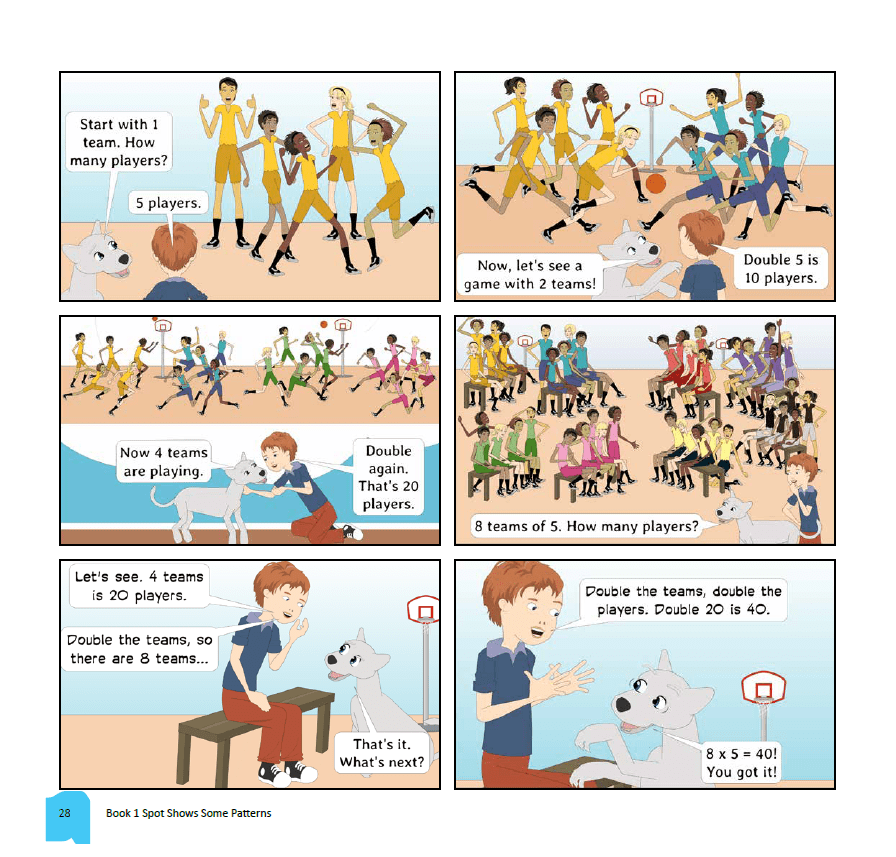
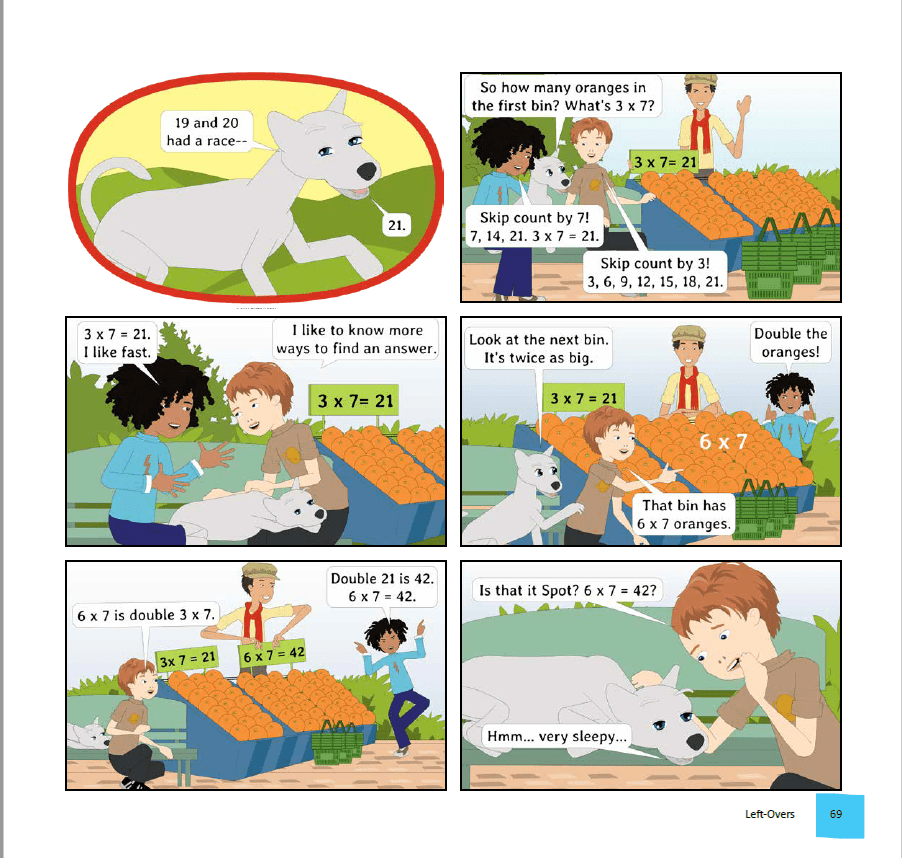
Times Tables like you’ve never seen before! I’ve written a graphic novel series with a new system for teaching the times tables.

The new system would be a good one for adult students–it teaches for understanding, the exercises match the method, and it allows for the fact that our students often are not good at rote memory work and timed tests.

A kids’ book for adult students?

So how could you use this method with adult students, even though the book is written for 7-9 year olds?

The ideal situation might be to work with a group of parents and guardians, and offer a mini course in helping their kids with the times tables, and carry on as I suggest below. Most instructors, however, won’t have that ideal situation. Still, many adult students have children in their lives who might be learning the times tables, or struggling with other math because they aren’t fluent or confident in their ability to remember the tables. Adults might be willing to learn a new method to help those kids.

You will meet resistance

Continue reading
A Math Book That Reads Like a Novel

A Math Book That Reads Like a Novel

I think of my comic as a math book for kids who like to read. It has all the elements of a novel–

Characters with strengths and weaknesses
A quest
A super hero
Conflict

Like any good quest, the characters find more than they bargained for. They learn about themselves and each other; they develop strength from bravely confronting obstacles, and come home again more confident to take on whatever life holds for them.

Continue reading
The Story Begins…

The Story Begins…

I learned a lot about teaching and story telling as I made the series Times Tables Make Sense. A comicbook was a new form for me, a form that uses few words, many fewer than I use when I’m actually in front of a class. But as I was making the comic, I had the same questions in mind: what do they know, what do I want them to learn, and how are we all feeling about it.

I like to get clear with students what the task at hand is.

We can’t all get to the same destination unless it is circled on the map.

__

__

Continue reading
Times Tables Make Sense

Times Tables Make Sense

I made a comic (well, three of them)

When I taught basic math in ABE, students were lost when it came to the times tables. They all remembered struggling with flashcards and timed tests. They remembered feeling frustrated. They remembered parents and teachers urging them to “try harder” when they were trying as hard as they could.

I saw how the times tables had been a stumbling block to all the math classes that followed. When you cannot recall the times tables, it is very difficult to understand and work with fractions and per cents, which come next. I saw how the teasing, and the feelings of failure or not being smart enough had taken all the joy out of math learning, and followed them into their adult lives.

Continue reading
Marking for Confidence

Marking for Confidence

Photo by Flickr on Pexels.com
  • A student brings you a piece of writing and as you glance at it, you notice that he has problems with periods—many are missing, and a few are out of place.
  • You are moving around the room as students work on a math assignment and as you sit down beside one student, you see that she has done some of the problems correctly.  When you look a little closer at the ones she got wrong, you see that she has made the same common error time after time.
  • A student hands an assignment in and you see right away that he has missed the point entirely—he might have been on a different planet when you were teaching the material, because he has done everything wrong, and you don’t know where to begin correcting the assignment.

Teachers have passed down the method for handling these situations for centuries—mark the papers, pointing out the errors, and ask the student to correct the errors.  The teacher may look at the mistakes with the student and review the proper procedure, or may ask the student to refer to the textbook to find out how to do the work. In my experience, this approach works only with students who have got nearly all the answers right.  

Continue reading
Learners on the Teaching Team

Learners on the Teaching Team

This post is adapted from an article I wrote for WORLD EDUCATION • MAY 2008 23 Focus on Basics

Getting learners on the teaching team is my first order of business at the beginning of a new class. I like to put them on notice that my class is a little different, that I ask for unexpected things from students, that I expect them to participate in shaping the class.

Adult Basic Education students come with strong ideas about what school should look like, and they want me to stick to that program. When I ask them to do something unusual–an art project, for example, or the dreaded working in groups–they resist. They zone out, or grumble, or refuse to take part, and generally rain on my parade.

Continue reading
Math Strategies in Context

Math Strategies in Context

A student demonstrates that 1/2 = 6/12, 3/6, 2/4 and 5/10

“EXPLAIN HOW YOU WOULD TEACH YOUR LEARNERS PLACE VALUE” and “Explain in detail how you teach ABET level 1 learners fractions” are two recent requests from readers of this blog. (ABET stands for “Adult Basic Education and Training” and is a term used in South Africa as well as other places.) Continue reading

The Joy of the Difficult

The Joy of the Difficult

I remember early on in my teaching ABE career, I ran into a colleague who wanted to have stories and articles with happy endings so we didn’t add to the misery of the students’ lives. I couldn’t then tell her why that seemed so wrong-headed to me. She didn’t want anyone upset and wanted the class to be comfortable for everyone—and I suspect most of all for her. —Evelyn Battell, comment on an earlier post

Many ABE instructors will give the same reasons as Evelyn’s colleague for not wanting to use “difficult” material with their students: it will upset the students, and it will make the teacher uncomfortable. The reasons come as two faces of a weighted coin: What is most comfortable for the teacher often turns out to be what is “best for the students.” Continue reading

A Trigger Warning Tells a Lie

A Trigger Warning Tells a Lie

danger FLKR flattop341 287724363_250344e314_zHere’s a recent trigger warning from my personal life. A group of people organizing an art show in a small gallery in a local community centre had invited people to submit works of art about women’s lives. One painting caused a lot of controversy because it referred obliquely to back-street abortions. Some members of the hanging committee wanted not to have it in the show; others were in favour of hanging it. They reached a compromise by including the painting, while placing a trigger warning on the door of the exhibit, Continue reading

Trigger Warnings 3: An Outlier

Trigger Warnings 3: An Outlier

In this series of related posts with the title “Trigger Warnings” I am talking about strategies for using “difficult” material in an adult literacy or ABE class. I’ll get to why it is important to use such material in a later post.

sun 5684697184_d397407927Usually I was aware that a piece of material might be uncomfortable or very difficult for some students, and could prepare accordingly, but once I was caught by surprise by the need for a trigger warning. As I think about it, my surprise surprises me. Did I think everyone would be comfortable talking about menstruation in an ABE class? Or did I bury any misgivings because I wanted to right an imbalance my feminist soul had noticed and railed against? It happened like this:

In an upper level ABE class one year, two women students came to me with a trigger warning that I ought to have anticipated, but didn’t. Continue reading

Trigger Warnings from Students: Standard Procedure

Trigger Warnings from Students: Standard Procedure

Welfare Moms

trigger_warningAfter my success with asking First Nations students to decide whether or not to use a video about one reserve’s struggle against alcoholism, I began to use the same procedure with other content that I thought might be problematic. I remember a video and an article about a group of mothers on welfare who were fighting back against the way they were portrayed in the media, and the way they were treated by social workers and others who had power to grant or deny them benefits. Continue reading

Trigger Warnings

Trigger Warnings

trigger_warningIt seems that “trigger warnings” are everywhere these days, from the usual “This program contains crude language and sexual content; viewer discretion is advised,” to “Trigger warning: rape, extreme verbal abuse, and torture.”

You might think if ever there was a place for a trigger warning, it’s an ABE, adult literacy or GED class where teachers daily work with students who have experiences of violence:

  • those whose childhood experiences of physical, sexual, or emotional abuse made it difficult for them to succeed in the K-12 system;
  • those who came from war zones, who may have been tortured and who saw loved ones killed or wounded;
  • those who, as youth or adults, were or still are involved in gangs or other criminal activity;
  • those who are currently living with violence from their boyfriend or spouse.
  • those whose schools lives were miserable because of taunts and bullying from students and teachers because they did not succeed at school tasks.

Continue reading

Joy in Disguise

Joy in Disguise

dancing for joyThe opportunity for joy often comes disguised as a request for advice. When I refuse to give advice, when I take a moment to ask a question instead, a space opens up to let the joy of teaching in.

A student working on a piece of writing asks, “What should I do? I don’t know if I should explain that Tom is my boss and my uncle right here at the start, or if I should leave it out until closer to the end.”

Or maybe it’s a more mundane question Continue reading

The Perils of Giving Advice

The Perils of Giving Advice

no smoking posters vertical“I can’t decide,” Maria said. “I don’t want people to smoke in my apartment any more, so I’m making a sign for the door. Should I say, “Please don’t smoke here” or “Butt Out”?

She had come to class with a project from home (the best kind of adult literacy work, generated by personal need and totally student driven).

She was asking for my advice, which put me in a very gratifying position: there I was, with someone tacitly acknowledging my expertise, and waiting to be told what to do. She had my ego right where it wanted to be!

“Always better to be polite when you’re asking people to do something…” The words were almost out of my mouth when my imagination was caught by the brevity and wit of “Butt Out.”

Suddenly I was sharing her dilemma–I couldn’t decide either.

It was the dilemma Marie presented, the dilemma of not knowing what advice to give, Continue reading

Foot Feedback

Foot Feedback

FootprintsScenario 1: Mohan tells you he has an appointment tomorrow at the financial aid office, scheduled for the middle of your class. He adds that he is sorry that he couldn’t get the appointment at any other time. The next day, he arrives at your class on time, slips out to go to his appointment, and returns quietly half an hour later.

Scenario 2: You explain an activity, divide the class Continue reading

Neither Kind Nor Patient

Neither Kind Nor Patient

patient dog Morgue fileThe last time I had my teaching evaluated by my administration, I was disappointed. Although I was happy to get a grade of “excellent” (highest on a five point scale), the comments from administration made me gag: “Kate is a kind and a patient teacher,” and Continue reading

I’m Sorry…

I’m Sorry…

temperPete was in my class that term, a student who described himself with pride as a “recovering asshole.” Most days it seemed to me that he was enjoying being stuck in the recovering stage, and wasn’t doing very much to move towards finally being “recovered.”

Still, we jostled along. He participated in class activities, and I held him accountable for treating others with respect.

One day in class he made a remark about women that seemed particularly aimed at me, and I lost it. I dressed him up one side and down the other. I can’t remember what he said, or what I said, but I remember that he shut up really quickly, and the other students tried to look like they were somewhere else.

I went home feeling ashamed of myself. Continue reading