“I Pass!” is Active, Not Passive

“I Pass!” is Active, Not Passive

I was talking to my friend Diana on the weekend, about the passing rule. She had read my post, “Just say Pass!” and it made her think about her experience in post secondary courses.

“It’s not good when people always pass,” she said. “In all my classes, most people hardly said anything. Two or three white men did all the talking, and the other students said nothing. Most people passed all the time.” Continue reading

Human Digits

Human Digits

digitsPick a digit. Pick your favorite digit–any one you want, from the pile on the table.” That’s how the “human digits” activity starts. It’s another social math activity, this one to teach place value, and to practice reading big numbers.

Make a Safer Space

I know I’m going to ask people to get themselves into groups, and some people will hang back and wait to be invited to join a group, which is stressful, and others will be nervous about being on their feet and not knowing what I have in store for them. So I put some energy into making the space more comfortable for everyone. Continue reading

Make Math Social

Make Math Social

This lovely video shows Elana Feder and her GED class doing a social math activity about Positive and Negative Numbers.

Continue reading

Silence Sends a Message

Silence Sends a Message

Whenever we talk about safety in the classroom, the question always comes up: How much can or should an instructor do?
I think most people would agree that the instructor’s job is to establish a tone of respectful discussion and to encourage everyone to participate. Going a step further, I have been writing recently about how I work to make it safe for students to decide if, when and how much they will participate (Just Say Pass and We Wait for Naomi). Continue reading

Not a Fairy Tale

Not a Fairy Tale

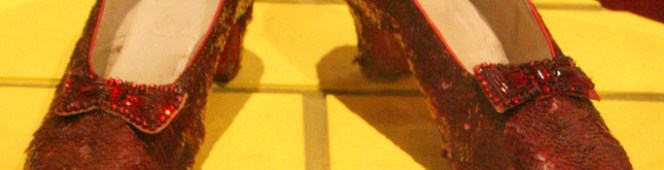
“Ruby slippers” by RadioFan at English Wikipedia. Licensed under CC BY-SA 3.0 via Wikimedia Commons –

In a recent post I told the story of Naomi, who said “I pass” for more than three months in our basic literacy class, refusing all invitations to take part in group reading, writing and math sessions, or to do any private work in those areas; who instead spent her time making and colouring banners.

She was able to refuse to take part because of the classroom rule “Just say pass,” which is one of my mainstays in teaching adult literacy. She sat on the outskirts of the class, watching, until she could find a way to participate that was comfortable for her. She tested us for three months until she decided she could trust the situation, until she decided it was safe for her. Continue reading

Learning and Violence dot Net

I often link to resources on LearningandViolence.net, so I thought I’d give it a little blog post of its own.
Learningandviolence.net is a treasure trove for people who work in adult basic education, literacy or essential skills programs.  Many students in such programs have experienced violence in their past, or are still dealing with violence now. And violence affects learning. Continue reading

We Wait for Naomi

We Wait for Naomi

Naomi started in September, a quiet young woman with a wary eye. She began to say “I pass” immediately upon hearing the classroom rule, Pass if you want to.”

We were team teaching the literacy class, in two interconnecting rooms. In one we held group sessions in reading, writing, math and science; in the other students could work individually on assignments or on private literacy work (filling out forms, reading and responding to business letters, etc.). We teachers scheduled ourselves so that we each taught some of the group sessions, and spent the rest of our time in the other room, helping students individually. Students were free to choose to take the scheduled classes, or to spend time working on their own. Some students spent all their time in the group sessions, and did assignments at home; most divided their time between the two rooms.

Naomi was different. She chose not to go to any scheduled classes. Every hour or so, as the group activity changed, one of us would invite her to join the next group session.  She would pass. The teachers figured it might take her a few days to get comfortable enough to join the group. Continue reading

Just Say “I Pass.”

Just Say “I Pass.”

When I took bridge lessons many years ago, our teacher asked us to go home and practice bidding. “Just look in the mirror,” he instructed us, “And say, ‘I pass.’ That is the bid that you’ll make most often.  And that is the bid that will keep you out of trouble as a beginner.”

We don’t play bridge in my literacy or ABE classes, but I do teach people to say the magic phrase, “I pass.” My second classroom rule is “You can pass if you want to.” Continue reading

Read a Book a Week

Read a Book a Week

P1030116

“Read a book a week” is the assignment I finally came to for all my literacy and ABE classes. It was Debbie who got me there. I don’t know about you, but when I started teaching, I used the same  ways of doing things that my teachers had used. I had watched teachers for 12 years in school, and then for four years at university. Talk about on-the-job training! A year in the Faculty of Education did very little to dull the impressions made by watching teachers teach, year-in, year-out. Continue reading

Who’s Engaged Here?

Who’s Engaged Here?

When I help students see and articulate what they do know, they may notice areas where they have trouble. For example, someone may say, “I make most of my mistakes when the denominators are different,” or “I get mixed up because I don’t know when to double the letter if I’m adding ‘ing.’”

When a student notices where he makes errors, that is a big step, a huge leap forward in learning.  But it is quite different from me telling him where he needs help. When he analyzes his work and notices the patterns of errors he makes, it is a sign that he is fully engaged in the process, and has taken control of his learning.

When I analyze his work and point out the pattern of his errors to him, it is a sign that I am fully engaged in the process, but he may or may not be paying attention. (from Marking for Confidence)