Reading from Life

Reading from Life

“What reading materials are appropriate for adult literacy students?”

reader MKat posted this question on my blog the other day, and went on to say, “I’m teaching my first teenage reading student now, and forcing ‘See Spot Run’ down his throat is not sitting well with me.”

My first, general answer would be “anything that the student is interested in and that you can stomach.” I would draw the line at porn and hate, but other teachers will have other boundaries.

Notice I said “anything you can stomach.” There is lots of reading material suitable for adult students that is not uplifting or useful, that has language and subject matter not usually considered appropriate for school use. If you can stomach it, and the student likes it, you are ready to proceed. Continue reading

Your Students Should Blog–

Your Students Should Blog–

sabrina's stash flickrGiving students a blog provides an instant audience, and a shift in identity for the blogger. A blogger looks at life with a writer’s eye and awareness of the audience; a blog gives its author a chance to examine, name and reflect on events, and may offer vindication and healing if the blogger is courageous enough to tell the truth.   Continue reading

Students Celebrate Their Supporters

Students Celebrate Their Supporters

Students’ writing improves when they write for an audience. When you find them an audience that is close to home and a situation that is meaningful, there are many reasons for them to get the writing right. If you make it safe for them to write (e.g., don’t bring out the grammar hatchet), not only will they make art (reflect, express and polish), they will display it for immediate feedback. 

In this activity, to honour and thank those who support them in coming back to school, students will consolidate and formalize part of their support system, and supporters will not only strengthen their commitment to supporting their student, but they will forge a connection with the literacy/ABE/GED program itself. Continue reading

The Launch

The Launch

Sheila Gilhooly Mistaken IdentityThe launch is a big day in the life of any book. It is the day when the art made out of life goes out into the world to see what its reception will be.

Mistaken Identity started as a small project to print Sheila’s stories for a small group of friends. barbara had 60 copies printed. (The list had grown from the original 20 we had planned for.) Continue reading

Getting to Grammar

Getting to Grammar

grammarIn her comment on The Grammar Hatchet Joyce used the phrase, “a constant reminder to consider people before grammar.” The interesting thing is that when students (or you or I or anybody else) write for an audience, grammar comes to the fore, naturally.  Continue reading

The Grammar Hatchet

The Grammar Hatchet

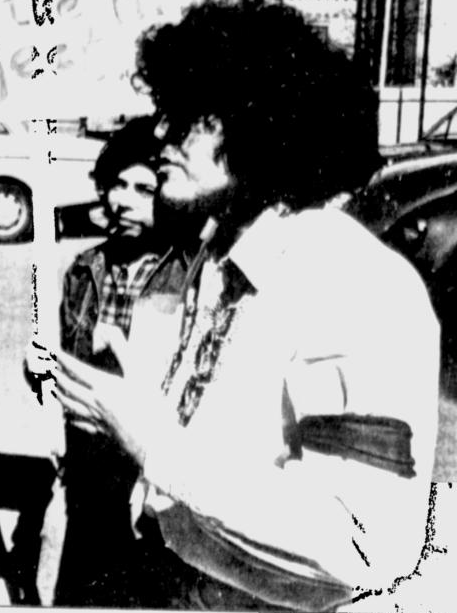
Actually me, in front, 70s.

Actually me, in front, demonstration, with Nancy Rosenberg
Ottawa Citizen, Apr. 7 1980

I had a taste, once, of someone using grammar to do a hatchet job on something that was full of meaning for me. Continue reading

Making Art from Lives

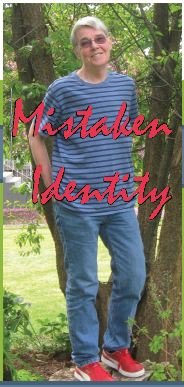
Mistaken Identity. Detail from cover

The day the proof copy comes back from the printers is always the big day, and Mistaken Identity was no different. It looked so good. Sheila and I were both excited, and so was everyone else who saw the first copy. And the excitement was even greater when we saw the e-book listed for sale on-line. (See the side panel to get the e-book.)

Sheila is not a literacy student. She is a friend of long standing, someone I have worked with over the years on many projects and feminist actions. And she is no stranger to print—she collaborated with Persimmon Blackbridge on Still Sane, a classic art show and book about a coming out as a lesbian in the grasp of mental health services in the ‘70s. Continue reading

Survival Strategies Come First

Survival Strategies Come First

Jenny HorsmanThe assignment was to make a graphic representation of the plot development in a novel we were reading together in class. To this end, I had assembled some supplies on a table in front of the room: various kinds of large sheets of paper, felt pens, pencil crayons, glue sticks, stickers and labels of the kind scrapbookers use, some collage materials, etc.

We talked about various possibilities, such as diagrams, time lines, and flow charts, Continue reading

If They Come, They Care

If They Come, They Care

www.katenonesuch.comI expected it to be an interesting activity. I was sure people would take part, and hoped they would enjoy it. But they didn’t seem to care.

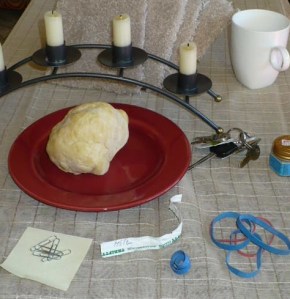
I gathered some objects on a table in the classroom–modelling clay, bread dough, a crumpled plastic bag, rubber bands, pebbles, a plastic mug and a ceramic mug, Continue reading

Every Student Cares

Every Student Cares

Frank commented on my post “I don’t give grades” by saying “Agreed – spend more time helping students who care – and waste less time on students who don’t.”

Frank’s comment doesn’t sit well with me. I don’t sort students into those who care and those who don’t care, because I know that every student cares. Continue reading